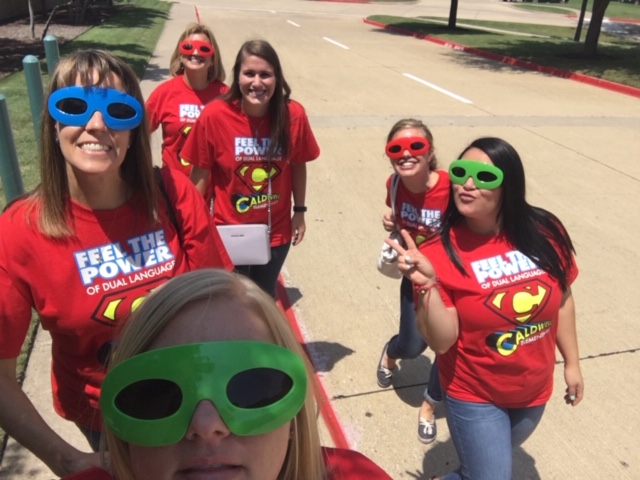
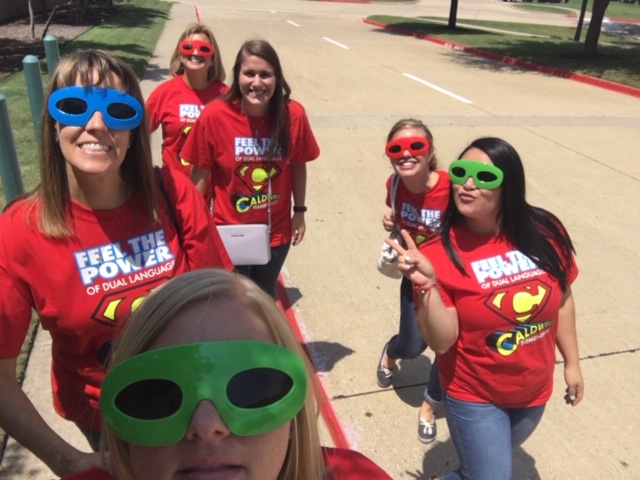
One of the greatest experiences in my career was teaching Kindergarten at Caldwell Elementary School in Mckinney, TX. I worked with an incredible group of teachers who were more then just a team, but dear friends. I learned SO MUCH working alongside of them each day. Although, I would have to say a bulk of my learning took place through my students. My Kinder babies taught me the importance of learning through engaging activities while still targeting all the TEKS (Texas State Standards). There were definitely many parts of the day that we had direct teaching going on, but a large percentage of the day was engaging the learner through differentiated centers, interactivity with classmates, shared learning, and motivating independent practice. If a five-six year old learns best this way, our toddlers MUST have the same implementation in their learning process. OUR TOTS SHOULDN’T EVEN KNOW THEY ARE LEARNING! This concept of play-school doesn’t mean that toddlers play is controlled the entire day and that there isn’t any freedom to have imaginative and unstructured play. Imaginative play and unstructured play is ESSENTIAL to any child, especially toddlers. They are still exploring the world around them and I would never want to stifle their imagination, creativity, and freedom.
So what is the balance between child’s play and Mama’s intentionally planned play?
I thought it might be good for me to break down how I use play-school with my two-year old and what that even looks like. I have sectioned out two periods of the day where I have intentionally thought through four different developmental areas that I want to target within that period of time aiming for at least three days a week. We are flexible and like I mentioned in My Journey, we are missionaries who are frequently meeting with pastors and people for meals, so I do not have a set time in the morning and in the afternoon each day. I do aim to have planned play when my eight month old, Megan, goes down for her morning and afternoon nap. Ideally I try to wait for the right moment that I see Emma’s interest aligning with the play activity I have planned. If it doesn’t naturally align, I guide her free play and my activity to align!
The morning developmental areas include:
- Spiritual Development/Relational Development
- Fine Motor Development
- Sensory/Social Studies Development
- Phonemic Awareness and Guided Reading
The afternoon developmental areas include:
- Dramatic Play
- Number Sense/Math
- Guided Reading Math Focus
- Nursery Rhymes
All of these developmental areas intertwine, are themed, and almost all the time I see my daughter carry them into her free play. Some days we do get to everything I have intentionally planned other days we don’t even get to any of it. The most important key to play-school is that it is NOT something that is burdensome for the child. It MUST BE something that is genuinely enjoyed and received. Our children have an entire life of STRUCTURED learning and if they can’t have fun and just enjoy their two-year old world, they unfortunately will never get that opportunity again. I hope that this clarifies a little bit of my play-school methodology. Leave me your thoughts!

 Mama's Bilingual Play-School